
Kutani was destroyed
- takaragura
- 2019年2月27日
- 読了時間: 2分

古九谷 (Old-Kutani)
In Daishoji 's village of Kutani (now Ishikawa Kaga), a good quality stone was discovered. Goto Saijiro of the samurai was trained at Arita. He comes back and begins as a policy of the clan early in the lunar calendar (around 1655), but it will be ruined in about 50 years (around the early 18th century). Kiln track is located in Kaga Yamanaka Kutani town and is called No. 1 kiln / No. 2 kiln. There remain two kilns and traces of Yoshidaya kiln revived in the 19th century.
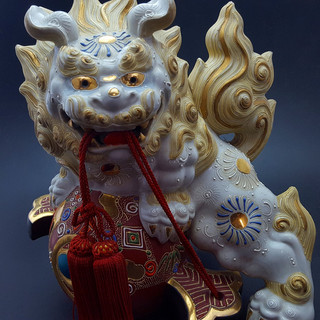
"Old-Kutani" features brilliant colors of dark colors such as blue, green and yellow and bold and innovative patterns. From the style it is classified as "Shonzuite", "Gosaite", "Aote" and so on. Shonzuite draws a pattern with a bright color tone such as red, yellow, green using a red outline. Gosaite draws patterns with dark colors such as blue, yellow, green and purple, using black outlines. Aote is similar to Gosaite in color usage, but the quality of the white porcelain of the substrate slightly lowered so that it hides the disadvantages of the substrate, and it is of a style filled with dense color such as blue, yellow, green, purple without margin.
About the origin of these early color paintings called "Old-Kutani" was claimed from the pre-war period to the 1960's the theory that it was "baked in Saga's Arita instead of Kutani". From the kiln marks of Arita's Yanbeta kiln, Kusunokitani kiln and so on, Old-Kutani and unpainted dyeing and color pottery have been excavated. The reason that "Old-Kutani is an early color work of Arita" became influential, etc., because Ishikawa Yamanaka's exterior pottery of the Kutani old kiln was different in composition from Old-Kutani.
A large amount of Old-Kutani color picture porcelain pieces were excavated from the Daisyoji residence trace of Tokyo. After 1987, scientifically investigated the embryo of these porcelain pieces by fluorescent X-ray analysis and activation analysis, the porcelain from Hizen and the porcelain from Kutani were extracted. As a result, it was judged that porcelain pieces like Gosaite Old-Kutani and Aote Old-Kutani of the genius were produced by Hizen, and the porcelain fragments deemed to be produced by Kutani from the analysis result are the clay earthly Old-Kutani , Glazing, molding and so on.
A group of initial color picture porcelain which has been positioned as Old - Kutani from the results of excavation of kiln scales and chemical analysis of excavated items as described above is considered to be produced mostly from Hizen of the 1640-1650 's. However, in 1998, Old-Kutani color picture pottery was excavated from the Kutani A ruins close to the Kutani old kiln, so the opinion that "the same style porcelain was made in several production areas" should also be explored is there.


コメント